Thursday, June 17, 2010

stills that look like movement


Paul Himmel (b. 1914). As a newly buoyant New York City emerged as an International Art Centre in the 1940’s many of the great photographers of the latter part of 20th Century were embarking on their careers. Paul Himmel was among those closely allied to this cultural firmament. His pictures became very well known through Steichen’s important exhibition in the 50’s „The Family of Man“.

In 1935 Paul Himmel and Lillian Bassman were married and they both enrolled at the New School, under the legendary Art Director Alexej Brodovitch. His first Fashion Shots were published in Junior Bazaar. Soon he was one of the few photographers working for both Vogue and Harper’s Bazaar. There are no negatives surviving of this time. The photo-journalistic mode at which Himmel excelled was quickly going out fashion in the 50’s and he was becoming more and disillusioned with commercial photography. Thus, Paul Himmel started his own projects: His series on Boxers - Circus and Ballet. Interested in movement Paul Himmel’s book Ballet in Action was published in 1954. George Balanchine one of the great leading choreographers rightly saluted Himmel’s achievement of succeeding in ‘the almost impossible task of getting stills that look like movement....the sense of and the sequences of movement are present.“.

His innate feeling for dance as much as the sophistication of his photographic technique (he used very long exposure times) was a distillation of the very essence of dance, conveyed in poetic and graphically powerful images. Himmel continued on this path and started experimenting more with grain structure, that he radically transformed into a series of silhouetted and elongated forms abbreviated almost to the point of abstraction. The critics though seemed not to be interested in this work, which ran counter to anything in contemporary photography. Also his next body of work, printing black and white negatives on colour paper, solarizing the result with couloured light, to achieve much of the intensity and starkness of much of the Pop Art then current, did not seem to interest the critics.

By 1969 Himmel was disenchanted with photography and gave it up to become a psychotherapist. Reconsidered today, much of his oeuvre appears remarkably prescient and it is fortunate enough that enough has survived finally to vindicate and demonstrate a most valuable contribution to photographic history. 1996 Paul Himmel was highly celebrated with his first one-man exhibition at Howard Greenberg Gallery, New York followed by a retrospective at the James Danzinger Gallery, New York. In 2003 his work was shown in New York and for the first time ever Lillian Bassman and Paul Himmel showed together at Gallery f5.6 in Munich.

yeux de rivière

Le crystal automatique

allo allo encore une nuit pas la peine de chercher c'est moi l'homme des cavernes il y a les cigales qui étour- dissent leur vie comme leur mort il y a aussi l'eau verte des lagunes même noyé je n'aurai jamais cette couleur- là pour penser à toi j'ai déposé tous mes mots au monts de-piété un fleuve de traineaux de baigneuses dans le courant de la journée blonde comme le pain et l'alcool de tes seins


allo allo je voudrais etre à l'envers clair de la terre le bout de tes seins à la couleur et le gout de cette terre-la


allo allo encore une nuit il y a la pluie et ses doigts de fossoyeur il y a la pluie qui met ses pieds dans le plat sur les toits la pluie a mangé le soleil avec des baguettes de chinois


allo allo l'accroissement du cristal c'est toi...c'est toi ô absente dans le vent et baigneuse de lombric quand viendra l'aube c'est toi qui poindras tes yeux de rivière sur l'émail bougé des îles et dans ma tête c'est toi le maguey éblouissant d'un ressac d'aigles sous le banian


Aimé Césaire

*****

The automatic rock crystal

Hello hello one night more and yet not worth searching for It's I the cave man there are cicadas that make their life dizzy as they do their death there is also the green water from lagoons even drowned I'll never have that colour to think about you Ipawned all my words a river of bather dolls' sled in the current of daytime blond like the bread and alcohol of your breast


hello hello I wish I be at the light inside of earth the tip of your breast of the colour and the savour of that very soil


hello hello one night more there is the gravedigger's fingered rain it's rain thay puts its foot in it on roofs rain ate the sun with chinese chopsticks


hello hello crystal growth it's you...it's you o gone with the wind and bathing young lady of earthworm when dawn comes in it's you who'll break your eye of river upon the moved enamelled islands and in my head it's you the dazzling maguey* of an eagles' backward beneath the banian**


Translated by Gilles de Seze


*Flower from the agave family
**Indian fig tree

Wednesday, June 16, 2010

furtive eroticism


In the early 1970s Lillian Bassman, among the most important fashion photographers of the 20th century, made the decision to dispose of her career, quite literally. Artists do this all the time without the intent — giving themselves over to excess, retreating to ashrams — but Ms. Bassman’s approach was aggressive and determined. Disillusioned by the costuming of the late 1960s, she had had enough of fashion and expressed her disdain by destroying decades’ worth of negatives and placing others in a trash bag in the coal room of her Upper East Side carriage house. Her era of furtive eroticism was over, and there was no point in scrapbooking it.

—”Femininity, Salvaged” by Ginia Bellafante, New York Times, July 16, 2009

Fado e ketchup

"Um pequeno país, no cu (cauda) da Europa, a República dos Cagados, inviável economicamente e inexistente culturalmente.
Rife-se !"

Pichagem numa parede de Lisboa.
Que jorre o ketchup ou que nos afundemos em fado.

Glossolalia


Glossolalia
From Wikipedia, the free encyclopedia
Glossolalia is commonly called "speaking in tongues". For other uses of "speaking in tongues", see Speaking in Tongues (disambiguation).

Some uses of 'Glossolalia' (including here) refer to Xenoglossy, speaking in a natural language that was previously unknown to the speaker.
Glossolalia or speaking in tongues is the fluid vocalizing (or, less commonly, the writing) of speech-like syllables, often as part of religious practice. Though some consider these utterances to be meaningless, those that use them consider them to be part of a holy language.

Tuesday, June 15, 2010

History of everything


"Sigmar Polke grew up in East Germany. After moving with his family to West Germany, settling in Wittich, he studied glass painting from 1959 to 1960 at Dusseldorf Kaiserwerth and then transferred to the Academy of Art. With fellow student Gerhard Richter he formulated a Pop inspired "Capital Realist" anti-style of art, appropriating the pictorial short-hand of advertizing. The anarchistic element of the work Polke developed was largely engendered by his mercurial approach. His irreverence for traditional painting techniques and materials and his lack of allegiance to any one mode of representation has established his now-respected reputation as a visual revolutionary. Paganini, an expression of "the difficulty of purging the demons of Nazism" - witness the "hidden" swastikas - is typical of Polke's tendency to accumulate a range of different mediums within one canvas. It is not unusual for Polke to combine household materials and paint, lacquers, pigments, screen print and transparent sheeting in one piece. A complicated "narrative" is often implicit in the multi-layered picture, giving the effect of witnessing the projection of a hallucination or dream through a series of veils."

Segredo


Guardas no teu regaço as lágrimas dos meus segredos

Sleep of reason, 4th series(Orange)


I love this series, please take a look

Amarração


A instalação “Amarração”, de Pedro Cabrita Reis.

Lê-se no site da EDP o seguinte:

"A escultura faz-se utilizando materiais simples e comuns que nos habituamos a reconhecer como fazendo parte da vida quotidiana e que tanto podem provir de uma origem industrial como de um estaleiro de construção.
Concebida especialmente para o Mosteiro dos Jerónimos, “Amarração” é uma obra que nos sugere algo entre barco e cais, retomando assim uma relação de proximidade entre o Tejo e o Mosteiro, quando à praia que aqui existia, chegavam ou partiam navios e marinheiros.
Numa relação vibrante com o monumento, esta nova obra mostra-nos como em arte se torna possível o encontro de tempos históricos diferentes, podendo-se usufruir desse modo e com inegável riqueza, da visão de um artista contemporâneo que nos revela, de um modo particular, a magnificência desta obra única do estilo Manuelino."

Gosto desta escultura, que agora se encontra, algo perdida, nos jardins do CCB.
Quem quer amarrar um barco em terra, subir escadas que não levam a sitio nenhum ?

O site do artista

Wednesday, June 2, 2010

túlipa negra


Conta-se a história do senhor que muito divertido no Túlipa Negra, recebe uma chamada da mulher e exclama aflito : " - Como soubeste que estava aqui ?".
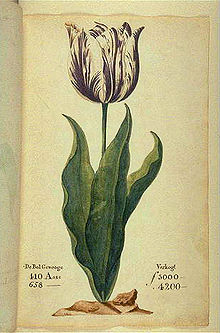
É claro que os telemóveis eram uma novidade então e Portugal vinha de entrar no ciclo de abundância que a Europa fugazmente nos propiciaria. Curiosamente a Holanda também teve a sua bolha das tulipas...só que no século XVII.

Vamos assim chegando sempre atrasados, como é aliás nosso apanágio e somos reconhecidos por isso...Chegamos atrasados às partes boas e às partes más, mas vamos chegando e ninguém nos pode negar um jeito muito próprio de chegar e de fazer.

Citando Alberto Caeiro :

O Tejo é mais belo que o rio que corre pela minha aldeia,
Mas o Tejo não é mais belo que o rio que corre pela minha aldeia
Porque o Tejo não é o rio que corre pela minha aldeia.
O Tejo tem grandes navios
E navega nele ainda,
Para aqueles que vêem em tudo o que lá não está,
A memória das naus.

O Tejo desce de Espanha
E o Tejo entra no mar em Portugal.
Toda a gente sabe isso.
Mas poucos sabem qual é o rio da minha aldeia
E para onde ele vai
E donde ele vem.
E por isso porque pertence a menos gente,
É mais livre e maior o rio da minha aldeia.

Pelo Tejo vai-se para o Mundo.
Para além do Tejo há a América
E a fortuna daqueles que a encontram.
Ninguém nunca pensou no que há para além
Do rio da minha aldeia.

O rio da minha aldeia não faz pensar em nada.
Quem está ao pé dele está só ao pé dele.


I sing, I sing


found here

Teutonic


'He must increase, but I must decrease.'


1515 (140 Kb); Panel from the Isenheim altarpiece: oil on wood 269 x 307 cm (105 7/8 x 120 7/8 in); Musee d'Unterlinden, Colmar


point de vue


Simone de Beauvoir, Paris, 1946

We need moral voices to come forward, we need to hear them.
We need to think and act about issues, we crave for it in our minds and in our hearts.

I am in training don't kiss me


read about her, here

Tuesday, June 1, 2010

Whispers and Shadows


Whispers and Shadows is an intimate selection of color photographs made by Fred Herzog in Vancouver 1959 – 1989. Although these images make up a detailed visual record of the city and its transitions, they transcend those very details to become an elegiac musing on the nature of humanity itself.

Amazing Grace


free at last, free at last !

A conversa

Tejo


mais um fim de tarde glorioso...

engravings


see more here

Monday, May 31, 2010

Rua Rodrigo da Fonseca

THE DRESS

THE DRESS

by C. K. Williams


In those days, those days which exist for me only as the
most elusive memory now,
when often the first sound you'd hear in the morning
would be a storm of birdsong,
then the soft clop of the hooves of the horse hauling a
milk wagon down your block,

and the last sound at night as likely as not would be
your father pulling up in his car,
having worked late again, always late, and going
heavily down to the cellar, to the furnace,
to shake out the ashes and damp the draft before he
came upstairs to fall into bed --

in those long-ago days, women, my mother, my
friends' mothers, our neighbors,
all the women I knew, wore, often much of the day,
what were called housedresses,
cheap, printed, pulpy, seemingly purposefully shapeless
light cotton shifts,

that you wore over your nightgown and, when you had
to go to look for a child,
hang wash on the line, or run down to the grocery store
on the corner, under a coat,
the twisted hem of the nightgown, always lank and
yellowed, dangling beneath.

More than the curlers some of the women seemed
constantly to have in their hair,
in preparation for a great event -- a ball, one would
think -- that never came to pass;
more than the way most women's faces not only were
never made up during the day,

but seemed scraped, bleached, and, with their plucked
eyebrows, scarily masklike;
more than all that it was those dresses that made
women so unknowable and forbidding,
adepts of enigmas to which men could have no access,
and boys no conception.

Only later would I see the dresses also as a
proclamation: that in your dim kitchen,
your cellar, your bleak concrete yard, what you
revealed of yourself was a fabulation;
your real sensual nature, veiled in those sexless
vestments, was utterly your dominion.

In those days, one hid much else as well: grown men
didn't embrace one another,
unless someone had died, and not always then; you
shook hands or, at a ball game,
thumped your friend¹s back and exchanged blows meant
to be codes for affection;

once out of childhood you'd never again know the shock
of your father's whiskers
on your cheek, not until mores at last had evolved, and
you could hug another man,
then hold on for a moment, then even kiss (your father's
bristles white and stiff now).

What release finally, the embrace: though we were wary
-- it seemed so audacious --
how much unspoken joy there was in that affirmation
of equality and communion,
no matter how much misunderstanding and pain had
passed between you by then.

We knew so little in those days, as little as now, I
suppose, about healing those hurts:
even the women, in their best dresses, with beads
and sequins sewn on the bodice,
even in lipstick and mascara, their hair aflow, could
only stand wringing their hands,

begging for peace, while father and son, like thugs,
like thieves, like Romans,
simmered and hissed and hated, inflicting sorrows
that endured, the worst anyway,
through the kiss and embrace, bleeding from brother
to brother into the generations.

In those days there was still countryside close to the
city, farms, cornfields, cows;
even not far from our building with its blurred brick and
long shadowy hallway
you could find tracts with hills and trees you could
pretend were mountains and forests.

Or you could go out by yourself even to a half-block-
long empty lot, into the bushes:
like a creature of leaves you'd lurk, crouched, crawling,
simplified, savage, alone;
already there was wanting to be simpler, wanting, when
they called you, never to go back.


listen here

bom dia !


Gosto desta foto.